

There is a Reason You Have No Accomplishments
Political Narcissism is Incompatible With the Constitution

Rep Chip Roy of Texas is someone I greatly respect. I have known him since he was a staffer twenty years ago. He is smart and he has the gift of legislative entrepreneurship. But he said something on the House Floor yesterday that exposes one of the reasons the 118th Congress is so dysfunctional.
“One thing. I want my Republican colleagues to give me one thing. One. That I can go campaign on and say we did. Anybody sitting in the complex, if you want to come down to the floor and come explain to me one meaningful, significant thing the Republican majority has done.”
There is a good reason Chip Roy has nothing to campaign on. He has been unwilling to compromise. Compromise is how the Founders designed the Constitution to work.
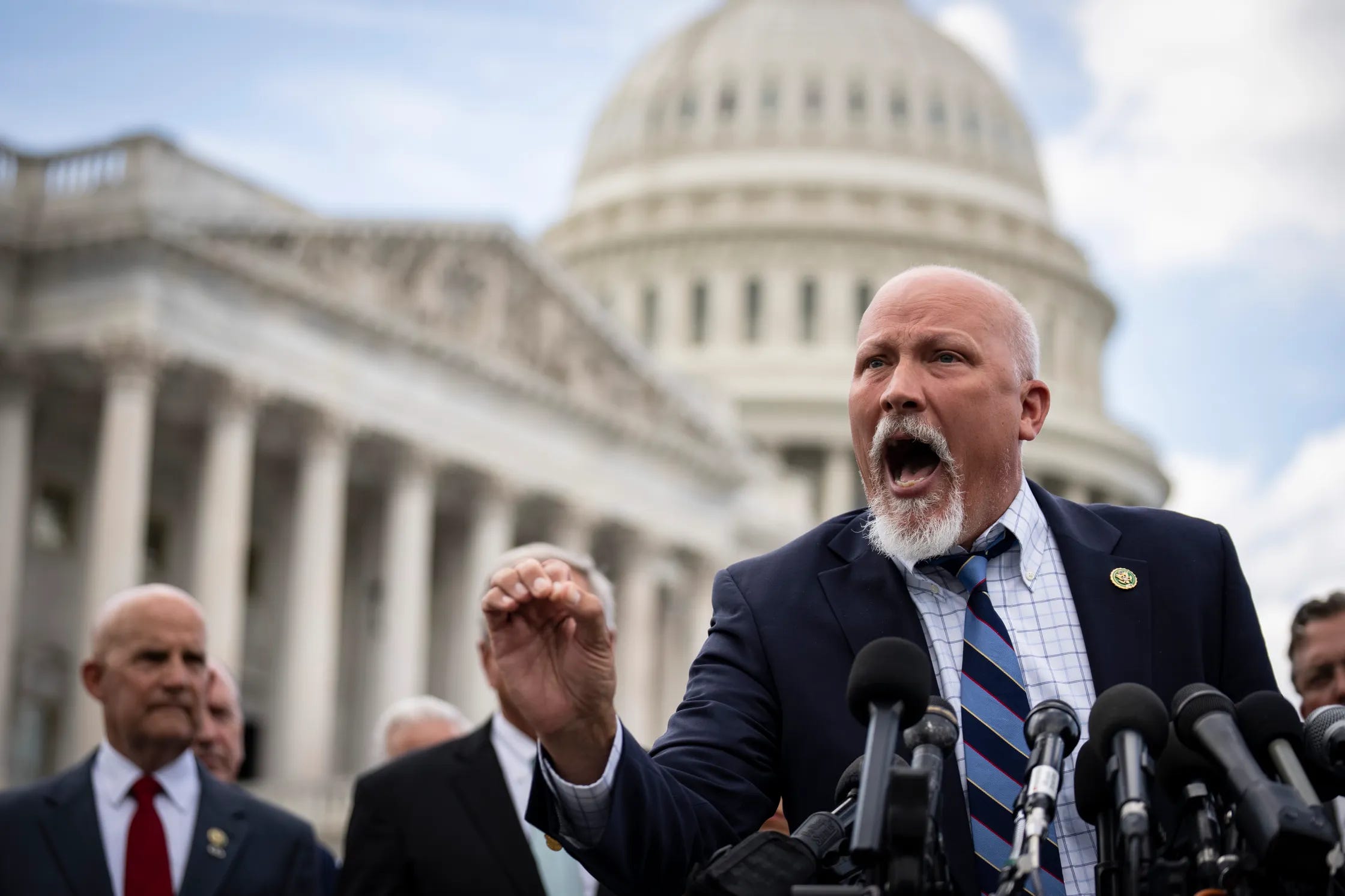
The Founders did not want any one person or faction to be able to dictate policy. What they feared most was the concentration of power, which is why they set up such an elaborate system of checks and balances. Congress and the Supreme Court check the President. The President checks the Congress, and because the Founders thought Congress would be so dominant, they made sure the House and Senate checked each other’s power. Congress and the President ultimately check the Supreme Court.
No one in Congress gets all they want by design, but if you are willing to compromise, you can make incremental progress toward your policy goals. In today’s politics, these two words, compromise, and incrementalism, are seemingly taboo on the ideological extremes.
Donald Trump has had many adverse effects on the body politic, including the coarsening of our language. It is as if people have lost their thesauruses and forgotten that English is a rich language that allows you to fully express yourself without being profane. But he is, first and foremost, a narcissist who sees the world revolving around himself. If a person criticizes him, they become an enemy. If one of his cabinet secretaries disagrees, they get a childish nickname. If a Republican dares to run against him in a primary, he labels them ungrateful and treacherous. And if he loses an election, he must have been cheated.
It is easy to see Congressional copycats. People like Matt Gaetz, who sends out campaign emails claiming how he is single-handedly shutting down the “deep state” and slaying RINOs (ironically, it means Republicans in Name Only). You have Nancy Mace, who thinks the purpose of serving in Congress is to get her face in front of a television camera.
But some more serious legislators also fall into political narcissism. They think that because they believe in something, everyone else must believe it too or acquiesce to their beliefs. But that is not how Congress works.
Congress is where representatives of a diverse population, holding different views, religions, ethnicities, and needs, come together in an ordered way to discuss issues and work towards an acceptable compromise. By its very nature, it is designed to create consensus.
Congress is where representatives of a diverse population, holding different views, religions, ethnicities, and needs, come together in an ordered way to discuss issues and work towards an acceptable compromise. By its very nature, it is designed to create consensus.
Even in the Constitutional Convention, no delegate was on the winning side all the time, and no delegate was on the losing side all the time. These geniuses had many differences of opinion, represented very different states, and understood that they had to compromise with each other to create a Constitution that would last for centuries.
In a parliamentary system, the winning party controls all the levers of government and gets the chance to enact its policy ideas. But in our system, a perfect trifecta – where one party controls the presidency, the House and holds a filibuster-proof majority in the Senate, is rare. Only three times since WWII has a party held the trifecta. From 1965 to 1967, Democrats controlled everything (which is more impressive when you consider that in those days, it took 67 votes to end a filibuster in the Senate). They passed historic legislation like the Civil Rights Act, the Voting Rights Act, and Medicare. From 1975 to 1977, Democrats again held the trifecta, but with far less success as Democratic President Jimmy Carter vetoed more than 30 bills passed by his Democratic Congress. From 2009 to 2011, the Democrats held the trifecta but lost it after one year when Sen. Edward Kennedy of Massachusetts died and was replaced by Republican Scott Brown.
Republicans have never held a trifecta in the modern era.
Today, Republicans hold a fraction of power in our government. They control the House of Representatives, but the Democrats control the Senate and the Presidency. It doesn’t take a genius to figure out that to get anything done, everyone has to compromise.
And they might pound the table and scream, “But you don’t understand how bad things are!” If that is true, the sooner they start a change process, the better off we will be. But by refusing to compromise, they lose repeatedly, and are sabotaging the change that might get things moving in the direction they think the nation should be headed. Blocking legislation, shutting down the government, or threatening to default will not accomplish their goals overnight. But compromise can lead to progress.
During the Debt Limit Extension debate, Republicans staked out a solid position that cut government spending by a considerable amount. Passing that legislation enabled then-Speaker Kevin McCarthy to negotiate a substantial cut in spending - $2.1 trillion over six years - with the President and the Democratic Senate. It was not everything the Freedom Caucus wanted, but it was an incremental step in the right direction. Yet Rep. Chip Roy sees this as a failure, accomplishing nothing.
I would maintain that what we call the Republican Party does not hold an actual majority in the House unless it is in coalition with a far-right party. Follow my logic here.
I have always maintained that the vote for Speaker on the first day of a new Congress is the only vote that determines who is in the majority. That one vote sets up everything else, including committee chairs, House Rules, and even the distribution of office space.
At the beginning of the 118th Congress last January, 20 Members who self-identify as Republicans voted against the Republican choice for Speaker. Republicans then had to enter negotiations with the far-right party to bring them into the governing coalition. And like any European parliament, the far-right party made demands to be met for them to join the governing coalition. Included in those negotiations was a “destruct button” that Matt Gaetz pushed in October that allowed the far-right party, with the cooperation of all of the Democrats, to bring down the governing coalition.
Had the Democrats in the Problem Solver’s Caucus (a bipartisan caucus that claims to work towards bipartisan solutions) not lost all credibility by voting with Matt Gaetz, there might have been a serious effort to create a new governing coalition where moderate Democrats replaced the far-right party. Unfortunately, they blew that once-in-a-generation opportunity.
Instead, the far-right party defeated the Republican choices for Speaker. Finally, it came back into the coalition when Mike Johnson, who was acceptable to Republicans and the far-right party, was nominated.
If you notice, not all Members of the Freedom Caucus go so far as to be part of the far-right party. Members like Jim Jordan, who is ideologically aligned with many in the far-right party, still vote with the Republican Party on organizational votes. The problem is that, like their hero, Donald Trump, the far-right party is filled with political narcissists. They oppose anything except their vision of what legislation ought to be.
But, while it makes for great television spots and successful fundraising appeals, it is ultimately self-defeating. The far-right party can destroy, but it cannot create. Twenty Members cannot dictate to the other 415 House Members, the entire U.S. Senate, and the President what policy shall be.
But, while it makes for great television spots and successful fundraising appeals, it is ultimately self-defeating. The far-right party can destroy, but it cannot create. Twenty Members cannot dictate to the other 415 House Members, the entire U.S. Senate, and the President what policy shall be.
At best, they can influence policy decisions and direction by incrementally working toward their goals. They cannot balance the budget tomorrow, but they can prevent the government from making the deficit any bigger and start the arduous process of working towards a balanced budget.
And it should be evident that our government does not work very well when factions refuse to compromise. And that was by design. The inefficiency of our government is a feature, not a flaw. It is the brake against the imposition of a single faction’s policy choices not obtained by consensus.
Incrementalism suggests that the most effective way to bring about change or make policy decisions is through small, gradual steps or incremental adjustments. Instead of radical or sweeping reforms, incrementalism favors a cautious, pragmatic approach. The Federalist Papers’ emphasis on a system of checks and balances reflects a cautious approach to governance. It recognizes the need to balance power among different branches of government, which aligns with the incrementalistic idea of avoiding concentrations of power. The Bill of Rights was included in the Constitution to prevent sweeping changes backed by a majority that would violate the inalienable rights of Americans.
In the day of short attention spans and TikTok videos, patience and prudence might not seem like Cardinal virtues to many people in politics. But there is no doubt that our Constitution was designed to make significant changes challenging to achieve.
In the day of short attention spans and TikTok videos, patience and prudence might not seem like Cardinal virtues to many people in politics. But there is no doubt that our Constitution was designed to make significant changes challenging to achieve. By forcing consensus and ensuring slow change, the Founders wisely prevented the nation from following political fashions and trampling on the rights of our most vulnerable citizens. It is also self-correcting as it seeks to fix the mistakes they and future governments would make.
The Founder's system that protected rights and fostered incremental change was ingenious. And that is why political narcissism will always be inherently in conflict with the Constitution.
If you want to accomplish something, learn how to compromise.
"In today’s politics, these two words, compromise, and incrementalism, are seemingly taboo on the ideological extremes."
Bingo. Especially on incrementalism. The left is much better at that than the hugely impatient Attention Deficit Hyperactivity Disorder-riddled (ADHD) House Republicans. Ritalin for them all, please, if only to help them focus (only partly in jest).
I’m clapping 👏🏻